My late father, who died at the age of 90, and thus had seen human beings at their worst, often said to me and to my baby boom friends, "What this society needs is a good depression." I was just awakening from a not usual for me afternoon nap today when this parental pronouncement came unbidden to my foggy brain. Dad also added that he wouldn't likely be here when this happened for him, a second time. I just expected, well, hoped, that I wouldn't be here when it happened either. But Bill Maher, that paragon of progressive virtue is apparently happy now that the frenzied governmental action in closing nearly everything a society needs to thrive has upended the lives of its people. The non-celebrity people I know, and one of which I am, are looking at having their life savings eradicated by the cure that is worse than the disease.
I still don't get it, but I know I am lousy at math, and I just don't get nearly and probably martial law where fewer people are being fatally affected than with a yearly flu. Any reason that people die is sad, warrants our compassion. But there is this odd aspect of things in the over the top handling of this denominated pandemic that seems to have the implicit idea that if the whole world is put on lock down, no one will die anymore. Which brings the line from Moonstruck to my mind, spoken by the character played by Olympia Dukakis: "I just want you to know no matter what you do, you're gonna die, just like everybody else."
https://www.youtube.com/watch?v=kBWxqcvH7Dk
So, when do we open up again for business as a free society? If more people die, will everything stay on hold until other people's lives, literally and figuratively, are ended? Or are we waiting for no one to die? That, of course, is impossible. And now, when we have our yearly flu, that at one stat in 2017 killed 80,000 people in the United States, will we have an annual "Safer at Home" mandate closing down everything again?
I find myself filled frankly with a multitude of conspiracy theories about what is happening. And here's the thing, I no longer think that any of them are remotely crazy. I am terrified at how easy it is to give up freedoms, well, not give up, find oneself shamed into accepting what is not necessarily logical for fear of being labelled an outlier, a person who does not fall into line with the unproven but firmly expressed positions of those who decline any debate.
I had a really dark thought pop up these last weeks. It is not worth living this way. I wonder whether the powers that be realize the oppression of minds, body and souls for which they are arguably responsible.
One other thought, not sure if it is positive or not. . . .about the newest concept "social distancing". I have always been one of those people not big on hugging, and other physical greeting. Over the years if someone approached me, I responded in awkward kind. But now we are mandated to keep six feet or so between us. I wouldn't mind keeping some version of that reactivated constraint on social interaction. I wouldn't mind staying with a courteous bow and smile once we go back to whatever in this world passes for normal.
Friday, March 20, 2020

Saturday, March 14, 2020
Suspend Public Masses, The Devil Does a Dance of Delight
The thing about this so called "advanced" society is that its fear is just as primal and destructive as it was for the poor sods of say, the 14th Century. In some ways, it seems that we progressive moderns are weaker and more foolish than our progenitors, the ones we look at askance as having lacked our enlightened perspectives on science and morality.
I am not a coronavirus "denier". Sickness and death, (as I noted in a prior entry) are very real. I applaud the idea that visits are limited by family and friends at nursing homes where the average age is probably around 80 or 85. I am very much involved with a woman at one such home who is 96. If you are sick, you shouldn't go out. Common sense.
But this frenzy which reminds me more of "Lord of the Flies" (we haven't gotten quite that bad yet, but there is time) than Charles Borromeo taking food to plague victims despite the risk to himself (and I realize that the old common sense, civility and charity probably require something in between), is becoming beyond the pale.
Oh, and soul destroying. . . .
What do our Catholic Clerics do? They begin to suspend Masses around the world. One priest in Italy who went ahead with a Mass is being sanctioned by authorities.
We cannot, you say, have people gathering in a public place during this crisis. But which, I ask you (and I gather that it is a 50 50 proposition) is the more damning of body and soul? For me, it is telling the People of God that they cannot do the one thing that is Central to their Faith, the one thing that will keep them grounded. It is always the case that if a person is sick, they are relieved of the obligation to Sunday Mass. To make some kind of pronouncement, "You don't have to go to Sunday Mass for Three Weeks" is not only redundant but another way of making inroads into the destruction of the already tenuous practice of Catholicism by its followers.
To my reading on the internet, there has NEVER been such a suspension of public Masses in the history of the Church. And whether there has been, or not, I can see nothing that the Devil is enjoying more than that people of faith are not at Mass and present for the Eucharistic miracle.
I was amused (in a paradoxically sad way) that all sorts of public fora are being closed for fear of numbers and contagion, but that at my local Ralph's there were hundreds or more of us gathering provisions of frozen pizza and as one of my friends noted, Ramen. Why aren't they closing these places, well, so far. Because people need the food and provisions therein.
We need the provision for our spiritual selves, perhaps even more than anything else.
There is nothing I can do except hope that my parish doesn't close for business. So far, it hasn't.
And the only thing I can think of, if the closings (and when will they end; when will we all be safe from disease and death?) persist is that there be an increase, if that is possible, of the private Masses, the sine populo. Maybe every priest in the world can say the Mass at the same time, whatever the time of day in whatever part of the world. And stop the Devil in his dance before it's too late.
I have not been looking at Facebook because of a small Lenten discipline (best I can do alas), but I have decided to post this entry. Pray for the sick. Pray for the dying. Pray for faith. Pray that we do not give the devil his due.
I am not a coronavirus "denier". Sickness and death, (as I noted in a prior entry) are very real. I applaud the idea that visits are limited by family and friends at nursing homes where the average age is probably around 80 or 85. I am very much involved with a woman at one such home who is 96. If you are sick, you shouldn't go out. Common sense.
But this frenzy which reminds me more of "Lord of the Flies" (we haven't gotten quite that bad yet, but there is time) than Charles Borromeo taking food to plague victims despite the risk to himself (and I realize that the old common sense, civility and charity probably require something in between), is becoming beyond the pale.
Oh, and soul destroying. . . .
What do our Catholic Clerics do? They begin to suspend Masses around the world. One priest in Italy who went ahead with a Mass is being sanctioned by authorities.

We cannot, you say, have people gathering in a public place during this crisis. But which, I ask you (and I gather that it is a 50 50 proposition) is the more damning of body and soul? For me, it is telling the People of God that they cannot do the one thing that is Central to their Faith, the one thing that will keep them grounded. It is always the case that if a person is sick, they are relieved of the obligation to Sunday Mass. To make some kind of pronouncement, "You don't have to go to Sunday Mass for Three Weeks" is not only redundant but another way of making inroads into the destruction of the already tenuous practice of Catholicism by its followers.
To my reading on the internet, there has NEVER been such a suspension of public Masses in the history of the Church. And whether there has been, or not, I can see nothing that the Devil is enjoying more than that people of faith are not at Mass and present for the Eucharistic miracle.
I was amused (in a paradoxically sad way) that all sorts of public fora are being closed for fear of numbers and contagion, but that at my local Ralph's there were hundreds or more of us gathering provisions of frozen pizza and as one of my friends noted, Ramen. Why aren't they closing these places, well, so far. Because people need the food and provisions therein.
We need the provision for our spiritual selves, perhaps even more than anything else.
There is nothing I can do except hope that my parish doesn't close for business. So far, it hasn't.
And the only thing I can think of, if the closings (and when will they end; when will we all be safe from disease and death?) persist is that there be an increase, if that is possible, of the private Masses, the sine populo. Maybe every priest in the world can say the Mass at the same time, whatever the time of day in whatever part of the world. And stop the Devil in his dance before it's too late.
I have not been looking at Facebook because of a small Lenten discipline (best I can do alas), but I have decided to post this entry. Pray for the sick. Pray for the dying. Pray for faith. Pray that we do not give the devil his due.
Thursday, March 12, 2020
Coronaviral Media
There is, as Dylan once said, "something happening here", but I am thinking what it is is decidedly clear.
There is certainly a thing called the Coronavirus. And that thing, that disease, is certainly killing people. Not so parenthetically, there is a lot to be investigated (though they will never allow it) about how it all percolated in China.
But to me, the real virus is the media, official and social, that has whipped up the frenzy that has people raiding Costcos, Targets and the 99 Cents Stores, and caused the very much hoped for (by our progressive wing) destabilization of the stock market and the retirement portfolios of lots of senior Americans. Children have been terrorized, not to mention the average hypochondriac. You would think that but for this outbreak, death wouldn't be a fact of life in the world, something that no one escapes sooner, or later.
Here are a few things from the web, from places like the CDC and the World Health Organization.
Let us begin with the Swine Flu of 2009-2010:
How about car deaths a year worldwide, from the World Health Organization. This goes back a few years, so we can assume it is more now.
There is certainly a thing called the Coronavirus. And that thing, that disease, is certainly killing people. Not so parenthetically, there is a lot to be investigated (though they will never allow it) about how it all percolated in China.
But to me, the real virus is the media, official and social, that has whipped up the frenzy that has people raiding Costcos, Targets and the 99 Cents Stores, and caused the very much hoped for (by our progressive wing) destabilization of the stock market and the retirement portfolios of lots of senior Americans. Children have been terrorized, not to mention the average hypochondriac. You would think that but for this outbreak, death wouldn't be a fact of life in the world, something that no one escapes sooner, or later.
Here are a few things from the web, from places like the CDC and the World Health Organization.
Let us begin with the Swine Flu of 2009-2010:
In the spring of 2009, a novel influenza A (H1N1) virus emerged. It was detected first in the United States and spread quickly across the United States and the world. This new H1N1 virus contained a unique combination of influenza genes not previously identified in animals or people. This virus was designated as influenza A (H1N1)pdm09 virus. Ten years later work continues to better understand influenza, prevent disease, and prepare for the next pandemic.
The 2009 H1N1 Pandemic: A New Flu Virus Emerges
The (H1N1)pdm09 virus was very different from H1N1 viruses that were circulating at the time of the pandemic. Few young people had any existing immunity (as detected by antibody response) to the (H1N1)pdm09 virus, but nearly one-third of people over 60 years old had antibodies against this virus, likely from exposure to an older H1N1 virus earlier in their lives. Since the (H1N1)pdm09 virus was very different from circulating H1N1 viruses, vaccination with seasonal flu vaccines offered little cross-protection against (H1N1)pdm09 virus infection. While a monovalent (H1N1)pdm09 vaccine was produced, it was not available in large quantities until late November—after the peak of illness during the second wave had come and gone in the United States. From April 12, 2009 to April 10, 2010, CDC estimated there were 60.8 million cases (range: 43.3-89.3 million), 274,304 hospitalizations (range: 195,086-402,719), and 12,469 deaths (range: 8868-18,306) in the United States due to the (H1N1)pdm09 virus.
Disease Burden of the H1N1pdm09 Flu Virus, 2009-2018
Since the 2009 H1N1 pandemic, the (H1N1)pdm09 flu virus has circulated seasonally in the U.S. causing significant illnesses, hospitalizations, and deaths.
Additionally, CDC estimated that 151,700-575,400 people worldwide died from (H1N1)pdm09 virus infection during the first year the virus circulated.** Globally, 80 percent of (H1N1)pdm09 virus-related deaths were estimated to have occurred in people younger than 65 years of age. This differs greatly from typical seasonal influenza epidemics, during which about 70 percent to 90 percent of deaths are estimated to occur in people 65 years and older.
Though the 2009 flu pandemic primarily affected children and young and middle-aged adults, the impact of the (H1N1)pdm09 virus on the global population during the first year was less severe than that of previous pandemics. Estimates of pandemic influenza mortality ranged from 0.03 percent of the world’s population during the 1968 H3N2 pandemic to 1 percent to 3 percent of the world’s population during the 1918 H1N1 pandemic. It is estimated that 0.001 percent to 0.007 percent of the world’s population died of respiratory complications associated with (H1N1)pdm09 virus infection during the first 12 months the virus circulated.
The United States mounted a complex, multi-faceted and long-term response to the pandemic, summarized in The 2009 H1N1 Pandemic: Summary Highlights, April 2009-April 2010. On August 10, 2010, WHO declared an end to the global 2009 H1N1 influenza pandemic. However, (H1N1)pdm09 virus continues to circulate as a seasonal flu virus, and cause illness, hospitalization, and deaths worldwide every year.
Here's one about the seasonal flu:
Seasonal flu death estimate increases worldwide
Press Release
According to new estimates published today, between 291,000 and 646,000 people worldwide die from seasonal influenza-related respiratory illnesses each year, higher than a previous estimate of 250,000 to 500,000 and based on a robust, multinational survey.
The new estimate, from a collaborative study by CDC and global health partners, appears today in The Lancet. The estimate excludes deaths during pandemics.
“These findings remind us of the seriousness of flu and that flu prevention should really be a global priority,” says Joe Bresee, M.D., associate director for global health in CDC’s Influenza Division and a study co-author.
The new estimates use more recent data, taken from a larger and more diverse group of countries than previous estimates. Forty-seven countries contributed to this effort. Researchers calculated annual seasonal influenza-associated respiratory deaths for 33 of those countries (57 percent of the world’s population) that had death records and seasonal influenza surveillance information for a minimum of four years between 1999 and 2015. Statistical modeling with those results was used to generate an estimate of the number of flu-associated respiratory deaths for 185 countries across the world. Data from the other 14 countries were used to validate the estimates of seasonal influenza-associated respiratory death from the statistical models.
Poorest nations, older adults hit hardest by flu
Researchers calculated region-specific estimates and age-specific mortality estimates for people younger than 65 years, people 65-74 years, and people 75 years and older. The greatest flu mortality burden was seen in the world’s poorest regions and among older adults. People age 75 years and older and people living in sub-Saharan African countries experienced the highest rates of flu-associated respiratory deaths. Eastern Mediterranean and Southeast Asian countries had slightly lower but still high rates of flu-associated respiratory deaths.
Despite World Health Organization recommendations to use flu vaccination to help protect people in high-risk populations, few developing countries have seasonal flu vaccination programs or the capacity to produce and distribute seasonal or pandemic vaccines.
Global flu surveillance protects all nations, including U.S.
CDC works with global partners to improve worldwide capacity for influenza prevention and control. CDC has helped more than 60 countries build surveillance and laboratory capacity to rapidly detect and respond to influenza threats, including viruses with the potential to cause global pandemics. These efforts, along with technical support, has helped some partners generate estimates of influenza-associated deaths, which contributed to this global effort.
Global surveillance also provides the foundation for selecting the viruses used to make seasonal flu vaccines each year. This helps improve the effectiveness of flu vaccines used in the United States. Global surveillance also is crucial to pandemic preparedness by identifying viruses overseas that might pose a human health risk to people in the United States.
“This work adds to a growing global understanding of the burden of influenza and populations at highest risk,” says CDC researcher Danielle Iuliano, lead author of The Lancet study. “It builds the evidence base for influenza vaccination programs in other countries.”
The study authors note that these new estimates are limited to flu-associated respiratory deaths and therefore may underestimate the true global impact of seasonal influenza. Influenza infection can create or exacerbate other health factors which are then listed as the cause of death on death certificates, for example cardiovascular disease, diabetes, or related complications. Additional research to estimate non-respiratory causes of flu-associated deaths are ongoing.
- Nearly 1.25 million people die in road crashes each year, on average 3,287 deaths a day.
- An additional 20-50 million are injured or disabled.
- More than half of all road traffic deaths occur among young adults ages 15-44.
- Road traffic crashes rank as the 9th leading cause of death and account for 2.2% of all deaths globally.
- Road crashes are the leading cause of death among young people ages 15-29, and the second leading cause of death worldwide among young people ages 5-14.
- Each year nearly 400,000 people under 25 die on the world’s roads, on average over 1,000 a day.
- Over 90% of all road fatalities occur in low and middle-income countries, which have less than half of the world’s vehicles.
- Road crashes cost USD $518 billion globally, costing individual countries from 1-2% of their annual GDP.
- Road crashes cost low and middle-income countries USD $65 billion annually, exceeding the total amount received in developmental assistance.
- Unless action is taken, road traffic injuries are predicted to become the fifth leading cause of death by 2030.
Another from the World Health Organization about drownings a year.
In 2016, an estimated 320 000 people died from drowning, making drowning a major public health problem worldwide. In 2015, injuries accounted for over 9% of total global mortality. Drowning is the 3rd leading cause of unintentional injury death, accounting for 7% of all injury-related deaths.
And the coronoavirus as of today:
Coronavirus Cases:
134,670
Deaths:
4,973
Recovered:
69,142
Why is this happening? Why is the press in the United States, in particular, so set on scaring the beejezus out of every man, woman and child? It is one thing to report the reality of the outbreak. Fine. But to orchestrate emotional, psychological, economic and national damage in the name of freedom of the press is pure evil particularly in light of the fact that this event is no better nor worse than the many things to which fragile human existence is heir.
I can imagine how many purported witches would have been burned at the stake had today's media been in charge of the reporting in those dark days. Or who would have been blamed for the bubonic plague in the 14th century? I wonder if they had their version of Donald Trump?
You never let a serious crisis go to waste. And what I mean by that it's an opportunity to do things you think you could not do before.
Like, maybe, destroy a whole civilization. Oh, we have done that before.
History will record, if we survive history, that the American Media was one of the key reasons for the end of the United States. My father used to say, "Thank God I won't be alive to see it." I understand now where he was coming from.
Wednesday, February 26, 2020
Facebook Free, A 40 Day Lenten Discipline
Here it is again. Lent's first day, Ash Wednesday. As always, there is lots to do, spiritually speaking. Not that there isn't a lot to do, spiritually speaking, any other time of the year. But this span of 40 days is an opportunity to make a particular effort to purge the distractions of the daily world, and to consider with a laser focus the idea of our God who broke into time and space in order to re-establish a long broken relationship with His wayward creation by becoming one of us and experiencing the consequences of our chosen disobedience.
One distraction, of which I have been a slavish part since 2008, is Facebook. I cannot tell you how much of otherwise more profitably used time it has consumed, but I know when I reach for my phone, I inevitably check it, and consume both its edifying, and less edifying, memes, articles and opinions. In the last several years, it has been far less enjoyable, for this medium as so much other media, has become a place of verbal and emotional combat because of the unbridgeable political, societal, theological, philosophical disputes permeating the American milieu. You might say, "Anxiety, thy name is Facebook" these days. Or any of the various places where opinion, informed or uninformed is posited.
Facebook has become, I realize, something of a compulsion.
In order to give myself over to the soul cleansing work of Lent, it occurred to me that one (by no means the only) key ingredient in the work would be to make the effort not to check my Facebook page for the duration of the season, and see where that takes me.
There is a certain bemusement at this effort. It's certainly not a problem that the disciples of 2000 years ago could possibly have imagined. The saints are probably laughing at me from heaven. But if it relieves some of the sadness about and the anxiety over the anger on its pages, and makes me more patient, and kind, and helps to prepare me for Easter, and the season of Resurrection, that is a good thing I am thinking. Giving up Facebook isn't much of a cross to bear.
As I write, the first day of Lent 2020 has nearly ended. I have not looked at Facebook all day.
I have attended Mass as I do daily. I have received my ashes that remind me of my mortality and sinfulness. I have read some meditative passages. I have said the Rosary. It is a good beginning.

While from my blog page I shall post this entry to Facebook, I promise, I won't be looking to see if my FB friends have read it. At least, not until after Easter! Peace be with you all.
Sunday, January 26, 2020
Kobe Can't Be Gone
Sunday Mass was about to begin. We, the servers, and our priest, were standing in the back waiting for the organ to play and announce our procession. But a couple of folks were mentioning a death, one that had only happened. I assumed it was a parishioner. After all in a place which features not only Sunday or Daily Services, there are baptisms and there are funerals. It is an expected wave of ordinary comings and goings of the existential sort.
But just as someone said it was Kobe Bryant, a young and strong and famous man, there was a communal heart drop. And among the prayers, there would be an intention for his too soon gone soul.

I am not even remotely a sports fan. I go to the odd game, more baseball, than anything else. If I like a game, that is the one I do, and I enjoy the natural or historical surroundings of the various fields. If I have been to a basketball game, it was maybe once, and not likely to watch any team of note. Yet, my heart dropped with the others when I heard the name Kobe Bryant. You'd have to have been living under the proverbial rock not to know who this is, who this was. I knew two things for certain, that he was a profoundly talented player on one professional team for his whole 20 year career, and another that was less a shining thing, courtesy of the very press who will now spend the next many days raising him to the status of demi-god, in just as much a furor as when they sought to topple him in the pre-"believe all women" days.
Not only did my heart drop, but I felt--terrible, like it was a personal loss. How could that possibly be? But even more than that, another feeling, that it could not be possible for him to be gone. I am guessing that a lot of the people, more attached to him than I am, who are gathering near the site of the Calabasas helicopter crash site that took Bryant, and his 13 year old daughter, and seven others, feel that sensibility even more profoundly. Yes, it surely is about his being accomplished, and, at 41, his beginning a new career in businesses and charities and succeeding in all of these. It might be about what used to be called the "American Dream", the idea that any one of us could, with hard work, and of course, some particular talent, rise to the heights of human achievement.
I speak only for myself on this day of his death, less than 12 hours ago, and perhaps some others can say the same. It is about the truth of things we all know but avoid acknowledging as we move up the ladder of love or success or whatever is our desire as we go through our days. That nothing protects us in this life from its end. And that we must face, even if it is for a moment in time accept that we all can be, and will be gone. I learned something new about Kobe Bryant today that I did not know. He was apparently a Catholic. One of my fellow servers said that he heard Kobe was a regular church attendee.
If that is so, and his belief was stronger than mine is sometimes, then being gone from here is not a permanent condition and Kobe Bryant's family has not lost him completely, or forever.
Just a few thoughts off the top of my head. Rest in Peace, Mr. Bryant.
But just as someone said it was Kobe Bryant, a young and strong and famous man, there was a communal heart drop. And among the prayers, there would be an intention for his too soon gone soul.
I am not even remotely a sports fan. I go to the odd game, more baseball, than anything else. If I like a game, that is the one I do, and I enjoy the natural or historical surroundings of the various fields. If I have been to a basketball game, it was maybe once, and not likely to watch any team of note. Yet, my heart dropped with the others when I heard the name Kobe Bryant. You'd have to have been living under the proverbial rock not to know who this is, who this was. I knew two things for certain, that he was a profoundly talented player on one professional team for his whole 20 year career, and another that was less a shining thing, courtesy of the very press who will now spend the next many days raising him to the status of demi-god, in just as much a furor as when they sought to topple him in the pre-"believe all women" days.
Not only did my heart drop, but I felt--terrible, like it was a personal loss. How could that possibly be? But even more than that, another feeling, that it could not be possible for him to be gone. I am guessing that a lot of the people, more attached to him than I am, who are gathering near the site of the Calabasas helicopter crash site that took Bryant, and his 13 year old daughter, and seven others, feel that sensibility even more profoundly. Yes, it surely is about his being accomplished, and, at 41, his beginning a new career in businesses and charities and succeeding in all of these. It might be about what used to be called the "American Dream", the idea that any one of us could, with hard work, and of course, some particular talent, rise to the heights of human achievement.
I speak only for myself on this day of his death, less than 12 hours ago, and perhaps some others can say the same. It is about the truth of things we all know but avoid acknowledging as we move up the ladder of love or success or whatever is our desire as we go through our days. That nothing protects us in this life from its end. And that we must face, even if it is for a moment in time accept that we all can be, and will be gone. I learned something new about Kobe Bryant today that I did not know. He was apparently a Catholic. One of my fellow servers said that he heard Kobe was a regular church attendee.
If that is so, and his belief was stronger than mine is sometimes, then being gone from here is not a permanent condition and Kobe Bryant's family has not lost him completely, or forever.
Just a few thoughts off the top of my head. Rest in Peace, Mr. Bryant.
Thursday, January 23, 2020
Star Wars: The Rise of Skywalker. Almost Biblical, but Not If You Look A Little Closer
As the incredibly lengthy credits of the possibly last installment of the Star Wars movies ran, my companion movie goer said something I remember as "It was almost biblical".

My immediate reaction was to agree. Good over Evil. The nearly demonic Emperor Palpatine was not merely defeated, but Kylo Ren (birth name Ben Solo) turned from the Dark Side back to the Good Side, and joined Rey to destroy him all courtesy of the Force, that mysterious field of galactic energy that binds all things together and can be harnessed by the Jedi Knights. There was sacrifice. There was death. There was resurrection. Now, just wait a minute!!!!
It was biblical in appearance, but in its substance, it lacked the one feature that gives the Bible its essence. There is no God. I can see someone--even myself--trying to stretch it, "Well, the Force is kinda like God." Except it really is not. It has a duality, good and evil. Ah, shades of Mani! Two forces, one good, but not omnipotent, god-like, but not God, (who biblically is all powerful and all good) and the forces of evil, a devil, the devil, battle it out. And mankind, at least in this Star Wars version of things, can harness the good, or the evil, which, in my mind, makes man the center of all things, the very thing which got him (and her) into trouble in the first place in the actual Bible story. The Manichaean heresy started not very much after Christianity itself, in or about the third century, and has popped its head up in various guises since and here throughout the Star Wars fantasy to this perhaps final chapter. It has popped up, sort of, in the Star Trek universe also. After all, Spock was brought back to life not by man per se, but by a planet that was created by man's science. That force too had been sought by the evil (Klingons) and was wrestled back from them by the good Federation. Medicine has gotten so good in that universe that even when you are dead, the little tricorder thing that is used for everything can bring you back, if it hasn't been too long since you kicked the bucket.
Man is the Measure of all things, and ultimately can harness the Force itself. The Force, ultimately, is subservient to man, for good finally, if Rey's return to the place where this mythic universe started, Tatooine, the Jedi Master, formed by another Jedi Master, and so on.
The paradoxical thing, and probably this is purely personal, thus anecdotal evidence of the power of temptation itself, is that I like these science fiction universes. The idea that any of us could control that which governs good and evil, the intricacies of the threads of the universe, well, heck, that is mighty attractive. For those of you old enough to remember the old commercial, for Anacin (does that still exist?) it's a kind of hubris fueled analog to "Mother, I'd rather do it myself!" Or, to analogize, "There is no need for a God. I'd rather do it myself." And so, everything, our culture in every aspect nearly these days, is immersed in doing it all for itself, with a smug smile at not merely taking fire from the gods, but banishing all gods, the false and the one True. As Dr. Phil might ask one of those sad souls who needs to air the dirtiest of family laundry on national television might respond, "How's that working for you?"
So, what's the bottom line? I am not sure, to tell you the truth. I still like Star Wars. But maybe. . . .that's not a good thing? I don't know. Maybe it's food for thought, at least?
And my guess? Not the final Star Wars film. After all, a new Skywalker has risen.
Friday, January 3, 2020
New Year's Eve '96: A Constantine Story
It being the beginning of 2020, I have found myself re-arranging and, though I no longer make "resolutions" I have privately proclaimed a plan to be more fruitful in my endeavors, to eschew a tendency toward laziness and, as part of that hoped for plan to be more diligent in placing some of my father's short short stories onto this site. As it happened, a re-arrangement of a drawer revealed a few of the stories, which somehow had strayed from the usual place I maintain them. It also happened that one of these was my father's less than cheerful reverie about New Year's 1996, that harked back to one during World War Two and back again. It follows.
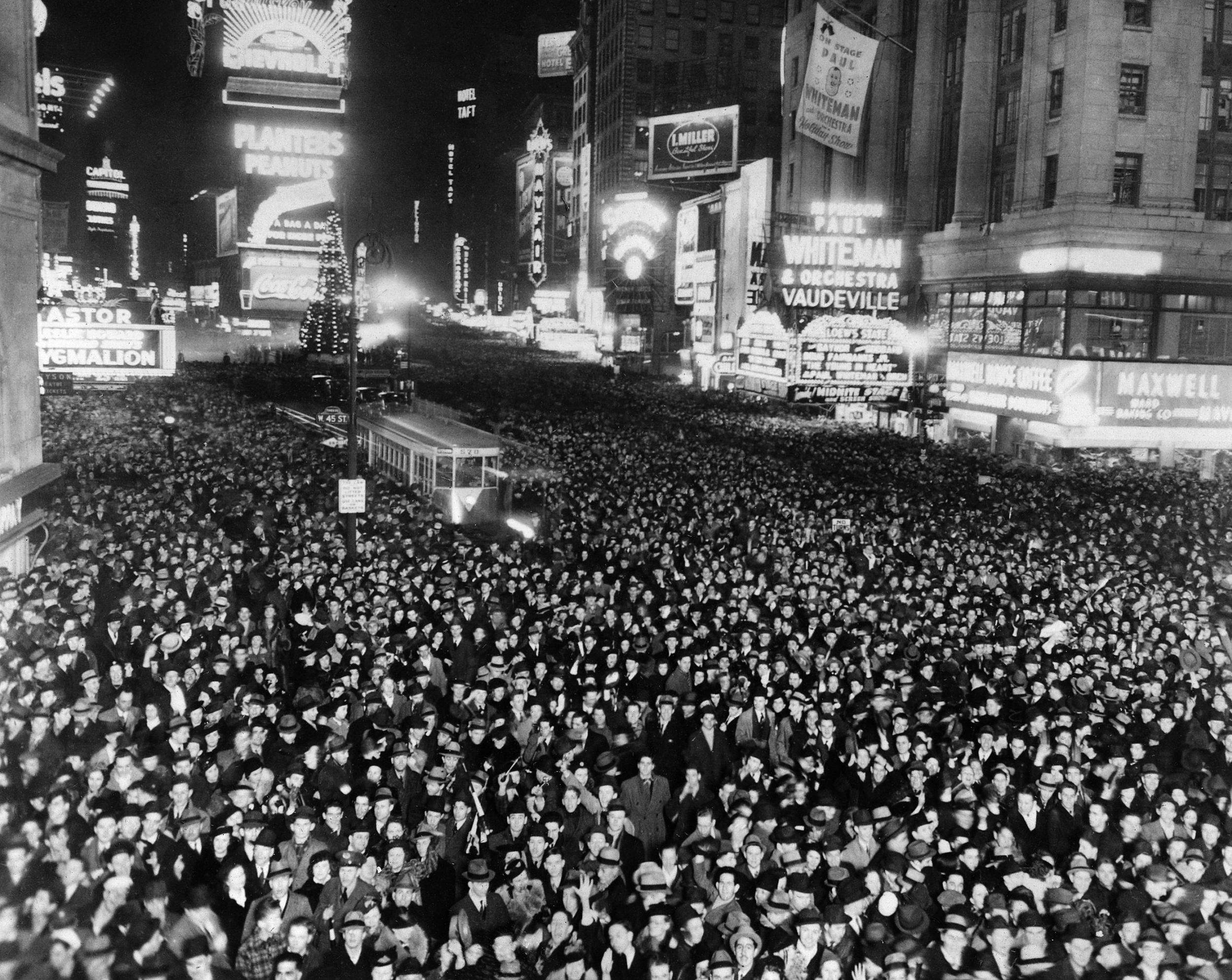
"What do you do on New Year's Eve?" The question is old and familiar. At one time it evokes either joy or terror. In my formative years, there are holy days of obligation. Saturday night is one. Not to have a date, not to have a "great time" is a sin requiring the penitential rending of garments. Failure is never admitted to one's peers, lest shame and opprobrium result. Worse, it is a diminution of the precious "macho" image.
Naturally, when I score big, I share the experience volubly, gilded for maximum effect. Though modesty forbids excess pride, some joys defy restraint. When I strike out, I do not talk much. I simply adopt a serene and satisfied expression and listen to others' lies.
New Year's Eve is another story. No failure is tolerated. Thus, like presidential elections, the planning begins immediately, following whatever constitutes the last celebration.
I notice that today the question evokes none of the trauma of yesteryear for me. This can be attributed to the wisdom of old age, or more accurately, the serenity of hormonal emanations.
I do not d very much this year. I feel more likely that what I have to report is a very bad hangover, induced by several martinis, interspersed with champagne, which I share with some equally sedate relatives. We decide on two highlights for the evening. Some TV station is scheduled to present a Guy Lombardo retrospective, and of course, there is the descending ball at midnight in Times Square, New York.
Of course, we do neither. We open another bottle of champagne and tell "sea stories".
I am a little sad that we miss the descending ball. Guy Lombardo's music does nothing for me, and, if I remember correctly, I do not like him when I dance to his orchestra many a New Year's Eves ago.
Times Square is different. I go there when I enter my teen age status, with some guys I hang out with.
We go early, though there is not much we can do in reference to the passing of a tired, limping year. Cronus is divested of his glory by an impudent son. The inexorability of Time.
We have no money. We simply get into the swirling masses, a solid undulating ocean of humanity. We are caught in the viscous flow, no longer capable of independent movement, a living demonstration of the reality of Fate.
There is no space unoccupied. Battalions, massive formations move in opposite directions. A lone cop, just ahead, tries to maintain separation of the hordes, swirling tide flows of chaos.
Frustration and anger bring crimson to his great bulging neck. For some inexplicable reason I am in violation of his purpose. He reaches out to grab me by the collar but the force of human momentum tears us apart. My collar is rent, but I am safe, and relieved.
In those days cops do not have a sense of humor nor is there the blessing we now have of juvenile offenses and the tolerance of the exuberance of youthful excesses.
We get to see the descending ball, and with a million other people, welcome the infant year January 1, 1934. https://www.youtube.com/watch?v=ruta0hMs1Z4
It is the last day of 1944, in Naples, perhaps a decade later. I am on the way from one place to another. I do not remember where or why. My pistol and carbine are weighing heavily on my restless soul. It is again the venerated day.
An importunate war interferes with the proper obeisance to a holy day that will never return. I enter a bar that is emitting some sounds of gaiety. I am mistaken. It is practically uninhabited. I sit at a table and order brandy. The sounds I hear come from an old Victrola. There seems to be only one record in the repertoire, the mournful crooning of the ubiquitous Bing Crosby dreaming of his "White Christmas."
This is my least favorite song and crooner of all time. This terrible, monotonous dirge has been everywhere in Europe since the first GI's arrive. Even the Italians add their traditional undulating rhythm to the unremarkable ditty. So, in pain, I order another brandy to palliate my suffering. Then I order another for the road back to my monastic billet and the merciful sack.
I am startled awake by the sound of widespread gunfire. There is the sound of anti-aircraft explosions. The city, and the word is total darkness. It is the Apocalypse.
I roll off my cot and search blindly for my weapons, retrieve them and rush outdoors. There are GIs everywhere, firing pistols and rifles into the air and shouting, "Happy New Year! Happy New Year". It is 1945 and I have almost slept through the arrival of the newly arrived interloper. I read somewhere that a falling bullet can kill as surely as a directed one.
Last year, in LA, seventeen people meet their maker in this manner. This year, the police list no fatalities. In the Naples of 1945 and the world, people were being killed wholesale, most, intentionally, so who would quibble on a few sacrifices in honor of the Great God Janus. Such statistics would only be the concern of the Graves Registration people, anyway.
Subscribe to:
Posts (Atom)