 |
| Prayer was, is, everything for him.
I was reading an article today in New Oxford Review (a Catholic magazine) about the Post-Vatican II funeral services at which it is not only assumed, but pronounced, that the deceased was immediately transported to Heaven. Naturally, the article took issue with this modernistic, and secular-ly informed, assertion. In the understanding of the philosophical and theological world preceding us by thousands of years today seen by the modern gnostic as quaint--maybe Heaven is not the final destination, or if it is, that happy condition is preceded by the purification of Purgatory. In a world of relativism, where good is variously defined and bad is banished from consideration, we all receive a celestial reward, (if you believe in such things at all) much as on earth the losing team members get a trophy too. We Catholics have been sold for our psyche's sake on the latter outcome. Sin, what sin?
The article put me in mind of my former pastor, spiritual mentor and friend, Fr. Parnassus, who died, just about three years ago. Like the rest of us, the clerically consecrated, the religious layperson-even, dare I say, the enlightened humanist of New Age or no faiths, he frequently did not successfully practice what he preached. Those of us who knew Monsignor fairly well, and perhaps particularly, those of us who shared some of the same faults, recognized in his stunning homilies references to his pride, impatience and insensitivity toward our fellow man to be battled not only with resolution but with the Grace of the Sacrament of Confession (today called Reconciliation) sought frequently. He often reminded himself and his parishioners that the Devil, that fallen angel, both dismissed and embraced (after all, do we not have a TV show out there called, "Lucifer", hero of the day?) by our society, was sitting right next to us, speaking words of deception to us. He was what we were, a sinner, and he remonstrated with us, both publicly and privately, to remember that he was surely going to have to endure Purgatory. We must pray for him when his time came. He seemed even to fear that in that confusion of this century, even practicing Catholics would fail to do it, assuming transmission directly to the beatific vision for all souls.
The markers in the priest section of Holy Cross Cemetery in Los Angeles are uniform. They include the name of the priest, date of ordination, date of birth and death, as was pointed out by the Holy Cross administration at the time of his burial. But Monsignor had made his instructions known very clearly and so, his marker includes the plea, "Please pray for him". It is a plea that he insisted upon for all we love, when they die. And so, we pray for them. For him. We will make a formal remembrance of the third anniversary of his death on August 14, 2016 at the 12:15 Mass, then again, at the 8 a.m. Mass on the 20th, with a road trip for the rosary at his grave site thereafter. And perhaps he will intercede for us, still burdened by the Cloud of Unknowing, and ask the Lord to help keep us faithful when it is ever so hard to be. |
Thursday, August 11, 2016
Third Anniversary

Sunday, July 24, 2016
Decaying, but not Discouraged
 |
| Me, circa 1979 |
 |
| me, 2016, only 37 years later |
As we drove to the theatre, I mentioned that this week I had again reconnected with some friends I had not seen in over a quarter of a century. The last time was in May to June, when I visited New York and met up with one of my earliest friends, a person born on exactly the same day as I was. I noted that in both cases, I had an image of the individuals that comported with the last time I saw them, that is, when we were all young. It was a bit of an adjustment to see these folks as they are now, and I am guessing for them to see me. None of us is what we were then--just starting out in adult life-Well, me, I am so terribly overweight these days (eating is my drug), that I know there was commentary on that aspect of the years' passing (although I never was svelte)as well there should be but I'd like to pretend otherwise. We most certainly were not the fresh faced youth of a quarter of a century ago. That was inevitable And yet, ironically perhaps, I felt as if, and I think they felt as if, no time had passed at all, in terms of our experience of the comfortableness of our interactions.
One of my long time friends jolted me as I concluded the tale of my experience. First he demanded (it felt like a demand, though perhaps it was not) to know whether I thought we looked as good as we used to--I had little time to consider it, though I knew the correct answer was "no" (and although I was never happy with my appearance at any stage of my life), and then he added that we were all "decaying".
Decaying? He said it with a tone of irrevocable doom. I felt annoyance. I felt rebellion. I thought, "Speak for yourself!" I am not decaying! Fat I might be, but otherwise I feel pretty good, and fairly capable. And you might think we might look bad but maybe that's not a foregone conclusion I hope.
And then I realized that it was true. I am getting older and with that age comes the inevitable decay of the flesh. He has advised me in the past he is an ex-Catholic. What that means in terms of his overall spiritual views, I cannot say, other than my impression he has the view that we live and die and that there is nothing beyond that death. I have made it a practise not to proselytize. Anyone who knows me knows of my faith. Perhaps I shall answer at judgment for not being more assertive, but I am what I am. I will not force another to believe what must come from personal assent.
So anything I say from here comes from my personal assent and is not likely to be embraced by anyone for whom the idea of God's salvation is a myth.
Adam and Eve would not have "decayed" had they accepted and followed the one rule of Paradise. And thus, we their descendants would not have faced that consequence. I suppose we are fortunate if all that happens to us is to decay, to wear out. That of course was not what happened to the Son of God. He never got past the age of 33, a robust time of life, because he accepted a violent death at the hands of His creatures so that those of us who live long enough to decay, and everyone else not so fortunate to live an average span, from the aborted fetus, to the mugged and murdered apartment dweller, might transcend death and be resurrected as our best selves, body and spirit.
So to a believer, and belief is constantly a battle for most of us, except for the most pure of saints, of which I do not count myself, decay is a temporary earthly reality. And even on earth, there is evidence that the decay is not permanent. What has decayed and died in Fall is reborn and fresh in the Spring.
The decay is part of the journey through that suffering which has been transformed through the obedience of the New Adam, Christ, from useless and final, to meaningful and ephemeral, if each of us chooses obedience and trust over contempt of God and cynicism. We are passing along with the world, but that is not what we were meant for.
Oh, it is hard, very hard, not to look at ourselves, with our wrinkled faces and creaking limbs and see beyond it to Life Everlasting. But wouldn't you prefer that I am right, that scores of theologians with far more perspicacious minds are right?
Maybe because in the last few years I have been around a great deal of elderly and sick people, I have come less to fear the breaking down of the body. Somehow, in their eyes and in the stories of their lives I have seen the spark of the immortality promised to us if we do not lose faith, if we do not become discouraged.
Here we are decayed. There, in Paradise, we shall be transfigured. I am going with that.
Monday, July 18, 2016
Idle Thoughts Whilst Waiting for the Man who Will Seal and Paint my Terrace

He said that he would be arriving around eight a.m., my Home Advisor expert on decks and terraces, to begin work. Now, anyone who knows me knows also that I am not an early morning person. So to be up at 7 thirty, shower, dress, and finish clearing items off the terrace is no small feat for me.
And then there was a message. My terrace repairer will not be here until about ten as certain materials he needs are not yet available.
I have a list of projects on my desk. I could start one of them. But after a cup of coffee and watching the hummingbirds taking nectar breakfast from my feeder--a joy because for several months they seemed to have ceased using it, but have returned with a splendid frequency, I decided not to take on any of the items on my ever expanding "to do" list just now.
I try to do a little morning prayer each day, mostly without success. But I see I am today distracted by making sure things are sorted for the work, like making sure my cats are safely in the back of the apartment and not in danger of being frightened or lost because of the work. And besides since I am never up quite this early, it seems silly to waste some quiet in the morning sun on this occasion that I am.
For a bit I lay on the only piece of furniture still on the terrace, a little cushioned divan, which I will need help to move before work is begun. And I noted how different is my life now from the one I had only five years ago, almost exactly five years ago, when I was a prosecutor at the State Bar of California. I'd be at my desk fielding calls in my supervisory role, from complainants about private attorneys and from the accused attorneys lamenting their ungrateful clients. I'd be worrying about meeting arbitrary ill considered deadlines and the chronic clamor of individuals and entities with their inconsistent demands for the operation of a system they neither understand nor, it would seem, care to understand so long as their particular constituents were placated. I devoted a quarter of a century to legal work that suited me, and at which I was surprisingly (to me) talented, and that did good from time to time, perhaps more than I give credit for having happened.
That extended part of my life's path ended in five minutes or less, as it did for three of my similarly situated colleagues, when the then relatively new CEO of the State Bar advised me that the Bar was going in a "different direction", the disastrous results of which have since become manifest and reported by the legal press. It was a stunning, though not entirely unexpected, blow at the time. Mostly, the hurt has subsided over the years, for I know that I have joined the ranks of many an individual whose excellent careers have been terminated so I have no reason to feel particularly victimized--it is the reality of business life private and public after all-- and I have a relative freedom not vouchsafed to most people. But still, sometimes, having seen the disastrous outcome of the decisions made by that now former CEO, and some dilettante minions, and knowing how that work was my calling as an attorney, I feel a twinge of reverberated hurt and irritation at the reality of ordinary injustice in the business world and the world at large.
And then I realize--I am glad I did not have to endure the misery the long suffering staff had no choice but to do. I had seen my share of dysfunction in the organization, a perpetual state marked only by changes in degree. Given what is happening right now in the United States, I begin to see that this is the inexorable order of man's disposition toward evil in greater or lesser form. What I miss probably, in my pride, is not being in charge of something.
I have to resist, in my voluntary activities, resorting to my executive disposition which some who worked with me considered to be too exacting. I have to learn to embrace the obvious--that the world spins on (until the apocalypse at least, yes I had to mention that) readily with or without me. For a small example: the person who is to work on my terrace is now a half hour later than he promised in his rescheduling. It makes me crazy because it happens almost every time any work has to be done. He arrived. He took a look at the terrace along with his assistants and told me the materials had not in fact arrived. He apologized and is coming back tomorrow. I like him. Don't know why exactly, but I do. I even trust that what he is telling me is true.
In point of fact. my frustrations don't matter, ultimately, except as an occasion of purgation. God has a mission for me, as He does for everyone, and that is to do what is before me in the present moment, whether I apprehend it or not in that moment. My mission was perhaps to develop a patience I do not possess inherently. I did ok.
All in all, I am blessed. Maybe now is a good time to offer a prayer of thanksgiving since I can spend another hour or so on my terrace before I go to Mass. That's something that is wonderful since I lost my job. I can go to daily Mass. I can get the Graces I so sorely need to face the larger world of the Republican (happening as I write) and Democratic National Conventions and the microcosmic realities of my days.
Idle Thoughts Whilst Waiting for the Man who Will Seal and Paint my Terrace
He said that he would be arriving around eight a.m., my Home Advisor expert on decks and terraces, to begin work. Now, anyone who knows me knows also that I am not an early morning person. So to be up at 7 thirty, shower, dress, and finish clearing items off the terrace is no small feat for me.
And then there was a message. My terrace repairer will not be here until about ten as certain materials he needs are not yet available.
I have a list of projects on my desk. I could start one of them. But after a cup of coffee and watching the hummingbirds taking nectar breakfast from my feeder--a joy because for several months they seemed to have ceased using it, but have returned with a splendid frequency, I decided not to take on any of the items on my ever expanding "to do" list just now.
I try to do a little morning prayer each day, mostly without success. But I see I am today distracted by making sure things are sorted for the work, like making sure my cats are safely in the back of the apartment and not in danger of being frightened or lost because of the work. And besides since I am never up quite this early, it seems silly to waste some quiet in the morning sun on this occasion that I am.
For a bit I lay on the only piece of furniture still on the terrace, a little cushioned divan, which I will need help to move before work is begun. And I noted how different is my life now from the one I had only five years ago, almost exactly five years ago, when I was a prosecutor at the State Bar of California. I'd be at my desk fielding calls in my supervisory role, from complainants about private attorneys and from the accused attorneys lamenting their ungrateful clients. I'd be worrying about meeting arbitrary ill considered deadlines and the chronic clamor of individuals and entities with their inconsistent demands for the operation of a system they neither understand nor, it would seem, care to understand so long as their particular constituents were placated. I devoted a quarter of a century to legal work that suited me, and at which I was surprisingly (to me) talented, and that did good from time to time, perhaps more than I give credit for having happened.
That extended part of my life's path ended in five minutes or less, as it did for three of my similarly situated colleagues, when the then relatively new CEO of the State Bar advised me that the Bar was going in a "different direction", the disastrous results of which have since become manifest and reported by the legal press. It was a stunning, though not entirely unexpected, blow at the time. Mostly, the hurt has subsided over the years, for I know that I have joined the ranks of many an individual whose excellent careers have been terminated so I have no reason to feel particularly victimized--it is the reality of business life private and public after all-- and I have a relative freedom not vouchsafed to most people. But still, sometimes, having seen the disastrous outcome of the decisions made by that now former CEO, and some dilettante minions, and knowing how that work was my calling as an attorney, I feel a twinge of reverberated hurt and irritation at the reality of ordinary injustice in the business world and the world at large.
And then I realize--I am glad I did not have to endure the misery the long suffering staff had no choice but to do. I had seen my share of dysfunction in the organization, a perpetual state marked only by changes in degree. Given what is happening right now in the United States, I begin to see that this is the inexorable order of man's disposition toward evil in greater or lesser form. What I miss probably, in my pride, is not being in charge of something.
I have to resist, in my voluntary activities, resorting to my executive disposition which some who worked with me considered to be too exacting. I have to learn to embrace the obvious--that the world spins on (until the apocalypse at least, yes I had to mention that) readily with or without me. For a small example: the person who is to work on my terrace is now a half hour later than he promised in his rescheduling. It makes me crazy because it happens almost every time any work has to be done. He arrived. He took a look at the terrace along with his assistants and told me the materials had not in fact arrived. He apologized and is coming back tomorrow. I like him. Don't know why exactly, but I do. I even trust that what he is telling me is true.
In point of fact. my frustrations don't matter, ultimately, except as an occasion of purgation. God has a mission for me, as He does for everyone, and that is to do what is before me in the present moment, whether I apprehend it or not in that moment. My mission was perhaps to develop a patience I do not possess inherently. I did ok.
All in all, I am blessed. Maybe now is a good time to offer a prayer of thanksgiving since I can spend another hour or so on my terrace before I go to Mass. That's something that is wonderful since I lost my job. I can go to daily Mass. I can get the Graces I so sorely need.
Saturday, July 16, 2016
A Moment in Another's Cocoon

As I watched the reportage of the attempted coup in Turkey just now, the day after the murder of 84 people in Nice by a Tunisian born individual whose motives are being debated by the pundits, I found myself thinking about my afternoon visiting my elderly friend at her nursing home. Her condition is such that she no longer reads or seems to have any interest in the news. As she sat in her blue wing back chair striving to find words for memories that are faded or fading, about her mother, about the cemetery in Pennsylvania to which she long ago arranged to commit her mortal remains, about the health of her former pastor, I found myself looking around her room, its walls covered with religious icons and paintings and then through the sliding glass doors leading to a patio surrounded by green grass and old trees, a lovely quiet, safe, even meditative environment unlike most skilled senior residences, I closed my eyes. This home is in the city, but way up a hill overlooking it, with a panoramic 360 degree view that encompasses even the ocean. When I drive a mere two or three minutes down the hill I am back at the entry to the larger and well trafficked world, where things like Orlando, or Nice, or San Bernardino have happened and where, alas, much worse will happen, since the heart of man, despite the gift of salvation, remains dark and has embraced pursuits unconstrained by any moral prohibitions. I had the most ephemeral of thoughts: if only I could stay here.
In a sense you are powerless in a nursing home, on the outer edge of existence itself. So, that wouldn't be the place for me, not now, at least. Right? But in so many ways, I, we, are powerless in the broader world and taxed endlessly by it. At least, in the home I would not be taxed by the madness that swats other human lives, children among them, with the bumper of a truck.
It would have nothing to do with me, living on the side of a hill in a little room like this, with all my needs tended. How odd a thing! It would be, as it is for my friend, as if none of it were happening.
I would not exist for the world and the world, except this minuscule patch, would not exist for me.
Bliss. And then Veronica repeats an earlier question I have already answered. I open my eyes.
No. I don't belong here. Not yet. "Thank God", it occurs to me. My friend's role is to be where she is, free of the concerns of a violent world. She had other roles in the versions of the mess human kind makes that occurred in years gone by. Now her role is to be tended to, having been a good and faithful servant--even being arrested for praying at abortion clinics, three times, one of the memories that she still can retrieve from time to time.
This cocoon is not mine to share. In time, if God Wills that I have a long life, I will find myself in one, but not until I complete whatever He has in mind for now.
Sunday, July 10, 2016
How Long, O Lord!
It's been too hard to write over this last several weeks. There have been just too many acts of pure evil perpetrated by human beings that are reported over and over and over and over until I want to scream. "If it bleeds, it leads" indeed and then some. I can't listen to anything from the media and I find reading the local newspapers enraging. And that I think is what is the point of these so-called sources of "information". It is not to state facts, that old, "where, what, when and who" of journalism long dead so you or I can decide what is true, truth having a foundation of long developed premises on which everyone agrees. No, it is opinion without fact or nuance. It is outright brainwashing. It is government, and groups, (professing but not demonstrating the liberality of ideas) censoring discussion. Social media isn't 'social' at all. But it is another locale for opinions without either substance or knowledge of philosophy or history or the Natural Law out of which this country was painstakingly developed by people who are summarily disregarded because unlike the man, woman or self-identifying individuals of our enlightened century, they weren't so well endowed with humanistic perfection.
What set me off today was something very small, but something I have noticed a great deal as I drive around Los Angeles. The driver in front of me doesn't signal a turn. "So what?" you might say. That small behavior is the seed of the larger breakdown of everything around us. It is another tendril of what was once called, in the days of Rudy Giulani as Mayor of New York, "the broken window syndrome". If you allow people to mar a neighborhood by breaking windows, and leaving them broken, or defacing with graffitti, or, for example, as a driver, never signal, without consequence, then it is easy to slide into the bigger things. There are a million "little things" that our society considers no big deal, even if there might be a "law" on the books about it. Like spitting on the street. People spit on the street all the time. Sometimes right in front of you. What's the big deal? Well, it's illegal for a reason. It is profoundly unsanitary aside from the fact that it disregards anyone in the vicinity or anyone who will be in the vicinity to step on the product left in utter contempt for the "other".
American society is breaking down. Unless a miracle occurs, I truly do not believe that America will make it to its 250th year, let alone its 300th. We are presently at year 240, and every underpinning of that delicate structure that has been America is being systematically deconstructed. The only thing I will point to for now is, to me, national suicide--the insistence not only of taking God out of the foundation of the nation, but of denying that He ever was a cornerstone of its formation. The problem is that the documentation of history does not support that God was out of the mix. That is what Natural Law is, something from God, a Divine inspiration. I am not saying it. History says it. History may be interpreted but not to the point of utter distortion. I take that back. It can be interpreted to distortion. That distortion is destroying the United States.
It may seem like I am trying to convince the reader of a purely personal position. In a society which rejects the idea of First Principles, I can understand that. If there is no objective truth then everything is opinion which has force only if enough people share that opinion. Then comes the persecutions history tells us, but history itself has become personal opinion. So, no, I am not trying to convince.
I am trying to stay sane in the relatively few years that are statistically likely to be given to me. And, maybe, those others who see things as I do, will derive some sense of stability. We can nod our heads to one another in sympathy and support. I am looking to that God who is being so thoroughly forbidden in the very society that was developed under His inspiration to keep me from despair, but also from fear and cowardice, for in time, I will have to make choices that will demonstrate whether I truly believe in the God I profess. It isn't a sure thing for I am very very weak.
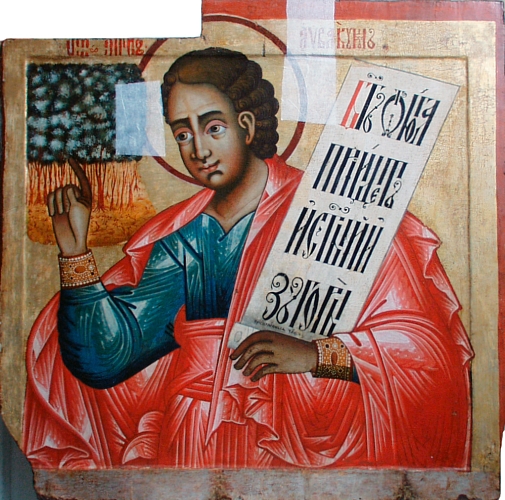
So like the prophet Habakkuk, I think the only thing to do is to pray.
Tuesday, June 21, 2016
Battle Scene
I was watching the last 45 minutes of "Saving Private Ryan". I haven't watched it before because I knew that there was a graphic depiction of war time casualties. I have intended to put on this site one of the stories that Dad wrote when he was at NYU, in 1948, after his four year stint in World War II, describing in two very short pages a battle scene. Maybe as I go through his stories again, I'll see more that describe, fictionally and non-fictionally, Dad's experience, which I have reason to believe was as true life graphic as "Saving Private Ryan" was Hollywood graphic. I doubt it. But this story isn't really graphic. It is subdued and I expect that after skirmishes or full fledged battles, or watching the flashes of battles from the rear, awaiting his turn to go back to the front, the life of an infantryman, was gray, dank and grim, the feeling of this short scene.
Streaks of gray begin to appear in the blackness of the East. A thick, damp mist hangs over the area and penetrates the walls of the grave-like trenches, making them moist and clammy to the touch. In the distance there is the sound of men digging--the scrape of metal against unyielding stone grates painfully on raw-edged nerves. Other sounds lend themselves to the discordant, predawn symphony of death; a racking cough that ends in a half-suffocating wheeze; a low moan of pain followed by the inevitable, pleading, "medics. . . .medics"; and nearby a boy sobbing--quiet, terrible, despairing sobs of loneliness and fear.
Overhead, shells whisper--like the sound of wind caressing autumnal trees. The ground vibrates with muffled explosions. From the rear come the answering booms of heavy artillery--unrealistic reverberations like the thunder of monster drums in a cavern. Bursts of orange-red sparks light up a distant hill--thuds trail leisurely behind the lightning flashes. Suddenly silence.
A fare bursts above, outlining in its greenish-white brightness the surrounding, ghost-like hills. A plane drones overhead and the hum indicates it is circling. A pop. Another flare. . .another, and the eerie fluorescence reveals a tableau of men clinging fearfully to the ground. Then it is gone. The booming recommences; chattering machine-guns lend their staccato monotones to the deadly cacophony; tank motors roar their readiness to move; the area is alive with motion. It is dawn.
They begin to bring up the dead and wounded. The bodies are carried in blankets. Four men, each holding a corner of a blanket, half-carry, half-drag a huge hulk, its limp feet trailing the ground. In a little clearing they lay the bodies in orderly lines. No attempt is made to lend dignity to the attitudes sudden death has given. The men lay the bodies down and walk off silently to gather more of last night's harvest.
The wounded are carried to the rear. The more seriously wounded to first. The less seriously hurt sit or lie on the ground. A soldier sitting on a rock shivers, despite the blanket draped around his shoulders. Blood oozes from a chest wound staining the olive drab blanket, almost black. From time to time he looks up and hate glares from blood-shot eyes.
The officers regroup their platoons. The men assemble in tired, uneven ranks, unshaven, haggard--exhaustion lines their faces. Uniforms are caked with mud; belts sag with the weight of grenades; shoulders drop under extra bandoliers of ammunition. They are ready to march again.
It begins to drizzle.

Streaks of gray begin to appear in the blackness of the East. A thick, damp mist hangs over the area and penetrates the walls of the grave-like trenches, making them moist and clammy to the touch. In the distance there is the sound of men digging--the scrape of metal against unyielding stone grates painfully on raw-edged nerves. Other sounds lend themselves to the discordant, predawn symphony of death; a racking cough that ends in a half-suffocating wheeze; a low moan of pain followed by the inevitable, pleading, "medics. . . .medics"; and nearby a boy sobbing--quiet, terrible, despairing sobs of loneliness and fear.
Overhead, shells whisper--like the sound of wind caressing autumnal trees. The ground vibrates with muffled explosions. From the rear come the answering booms of heavy artillery--unrealistic reverberations like the thunder of monster drums in a cavern. Bursts of orange-red sparks light up a distant hill--thuds trail leisurely behind the lightning flashes. Suddenly silence.
A fare bursts above, outlining in its greenish-white brightness the surrounding, ghost-like hills. A plane drones overhead and the hum indicates it is circling. A pop. Another flare. . .another, and the eerie fluorescence reveals a tableau of men clinging fearfully to the ground. Then it is gone. The booming recommences; chattering machine-guns lend their staccato monotones to the deadly cacophony; tank motors roar their readiness to move; the area is alive with motion. It is dawn.
They begin to bring up the dead and wounded. The bodies are carried in blankets. Four men, each holding a corner of a blanket, half-carry, half-drag a huge hulk, its limp feet trailing the ground. In a little clearing they lay the bodies in orderly lines. No attempt is made to lend dignity to the attitudes sudden death has given. The men lay the bodies down and walk off silently to gather more of last night's harvest.
The wounded are carried to the rear. The more seriously wounded to first. The less seriously hurt sit or lie on the ground. A soldier sitting on a rock shivers, despite the blanket draped around his shoulders. Blood oozes from a chest wound staining the olive drab blanket, almost black. From time to time he looks up and hate glares from blood-shot eyes.
The officers regroup their platoons. The men assemble in tired, uneven ranks, unshaven, haggard--exhaustion lines their faces. Uniforms are caked with mud; belts sag with the weight of grenades; shoulders drop under extra bandoliers of ammunition. They are ready to march again.
It begins to drizzle.

I am puzzled by the comment of the teacher, appended to the A given for the story--"But remember, the starkness is hard to live, easy to write or talk about." It seems to me that my father lived this or some similar experience. The starkness, and frankly, my Dad seems unduly restrained in his writing of the two pages, comes from what he saw, what many men saw, what probably is pretty much on target in "Saving Private Ryan". I get no sense that this was easy to write, although it might have poured out of him, in a way. I wonder if the teacher was ever in the service. I find I am a little annoyed by the comment; it feels patronizing. I wonder how Dad felt about that guidance after four years in the hell made by human evil. Yes, the starkness must have been hard to live. And I don't think it was ever easy to write about. He wrote about it so rarely, unless I find a cache somewhere I know not about. That is unlikely.
Subscribe to:
Posts (Atom)