Saturday, December 31, 2016

La La Land: A Year End Reflection


When I first came to Los Angeles, I think I felt as optimistic and entranced as the young couple in the  new movie "La La Land". I know I did. I knew from the moment I saw the palm trees and the ever blue sky and upon leaving the tunnel into Santa Monica on the 10 freeway to experience the Pacific beyond that this had to become my home. It has been, for just over 35 years, longer than ever I spent time in my formative town, New York. I considered, and still consider, New York, my foundation, a love of sorts, but for many years Los Angeles was the hope of fantasy come true. I was young, not as young as Emma Stone's character, when I came, but I believed I had endless possibility. I was an attorney in New York and thought that getting licensed here in California would merely be a prelude, a bookmark for what would become my real career. Like so many before me, I wanted to be in the "Industry". I wanted to be a television writer. There was some inkling this might not be a pipe dream, a few meetings. A few interested people in the "biz". I had a partner, in New York, but his path, in the 1980s, did not yet take him to California.

I also had this unrealistic sense that in leaving New York, I would leave behind the overly rules bound, inhibited soul that most people knew. Maybe here I could meet the person who saw me anew. Not wild, but a little freer than the fearful child I had always been.

Of course, I had to make a living, and I passed the Bar, and it was not a prelude to being a writer. It became my career. And perhaps I did not have the drive necessary to follow my dream. I know I did not have the courage. My father, a depression era child, whispered wisely that I had to have real work, I had to think about retirement and what I would live on when that came about, and given how few people "make it", my dreaminess was not logical. He wasn't wrong. And with my writing partner 3000 miles away before the internet, my dreaminess was replaced with getting an ordinary life constructed. I live now a reasonably comfortable life because I listened. I am grateful. But I do think about the choices I did not make. Sometimes it did not feel like a choice, but something more inexorable. Good? Probably, when all is said and done, but hard to see in the unfolding.

Maybe that's why La La Land touched me so much. It is an amalgam of old time musical fantasy and down to earth modern film making that worked for me, though I see from the many Facebook comments, it didn't work for everyone. Maybe it depends not only on taste, but on the nature of experiences and ideas one had when taking first steps into the adult world.

When the two main characters meet, Sebastian (Ryan Gosling) is a head over heels traditional Jazz enthusiast who imagines the day when he will own and play piano in his own club. Mia (Emma Stone) is a 20 something woman who has spent six years pursuing acting, and being rejected by thoughtless, arrogant directors and producers who text while she pours her guts out, or are interrupted by self important staff to confirm other appointments. When these two passionate people keep intersecting, and finally stop to talk, things break into music, not like the Gene Kelly, Fred Astaire days, but to me, more organically, with a nod to the days of old (which I love) but a 21st century flavor. They know and revere the traditional, but they are children of their millenial generation.

When, in the early iterations of their burgeoning relationship, Mia and Sebastian meet at a pool party where the musical offerings are entirely from the 1980s, I remembered exactly how I felt. I had a chance to make a mark doing something that I loved. If it were not writing, I figured maybe I could somehow use my voice, my speaking ability, which I had honed in college radio. Something would pop up, if I kept my eyes open, and I seized an opportunity.

Chance and choice. So much is chance, as well as choice. As their relationship becomes more important for both of them, Sebastian hears Mia talking to her mother on the telephone about him. No, he doesn't have a regular job. But he has a direction. He wants a jazz club. No, he doesn't have much, but he will. Despite his antipathy for a bland electronic jazz, he goes to work for a friend, and begins making 1,000 a week. But that means he is making albums and is on tour and he doesn't see Mia. Mia is alone, and not making inroads into her career. She mounts a one woman show, which he misses for a publicity shoot, and only a few people come. She hears two of the attendees say that she isn't very good, and she should keep her "day job." She goes home to Arizona, ready to resume her regular life, at a regular job. Dreaming after six years of rejection is foolish. And since Sebastian is not around to share either glory or failure, there is no dream to share. Sebastian and Mia break up.

But when a call comes to Sebastian by a casting agent who saw Mia at her one woman show, he is decent and kind and a bit of the old passion for their duality returns. He goes and gets her and pushes her back into acting. And her career takes off.  Now both their lives are on the road. She has her dream. Ultimately he gets his, a club called Seb's, the name her suggestion.

They meet one last time, when she and her husband happen upon the club of which he is the owner, doing his heart felt Jazz with other professionals of equal passion. He plays "their" song and one or both of them imagine their successes as if they had managed to stay together.

They danced together at the Griffith Observatory, or in the Hills of Hollywood against a red setting sun. They sang to one another. They loved. They won. They lost. Both at once.

Damien Chazelle, a millenial himself, is the director and writer, and my sense of him is of someone with an understanding of the past and his finger on the future. Ryan Gosling and Emma Stone aren't great singers, but their ordinary voices with strong lyrics about love and the flame of hope and possibility that can define early adult lives worked for me.

Quite frankly, as I watched them trip through places that I have in the last many years, an LA that had become blah for me, that I would consider leaving, frankly, except for the weather which still I love (and even the rain that we have now which we have greatly needed), I found myself feeling something I haven't felt in a long time--the renewal of possiblity.

In 2011, that "safe" career I used to have no longer was. I was fortunate that I had been there long enough that I am and God Willing, will remain solvent, but that five minutes of being told the organization was going "in a different direction" wiped out 25 years of my professional existence in a line of work that I had never been passionate about. My former partner moved to California in 1997, but by that time, I had been ten years in my job and writing was not a primary consideration. He still had a regular job, but with a new partner, who moved out with him, he had not conceded his dream.

I always had ideas, but I never committed to dedicating time to them. Even after I found myself "retired" from the law. Something always took precedence. Rightly perhaps, but you can always use that as an excuse.

I had never let down the walls which might have led to love, as well. I can't say that I have been unhappy. I have felt a sense of some Providence, even in the wandering I have been doing, some of it useful, much of it not.

What this movie did for me, and I suppose in a time when resolutions are usually made (I haven't made any in the last several years) is kismet of a sort, is bring back a sense of possibility.

No one can stop me from writing. Either I want to do it. Or I don't. That's not about anyone else. It is entirely in my own hands. The passion stands alone. In every aspect of life. If I have become lazy, that's my bad. No one can stop me from becoming more open, less afraid. If I still don't, that's on me.

So, as Mia sings in the movie, here's to the Fools Who Dream:

My aunt used to live in Paris
I remember, she used to come home and tell us stories about being abroad.

I remember that she told us she jumped in the river once, barefoot.

She smiled, leapt without looking and she tumbled into the Seine!
The water was freezing, she spent a month sneezing, but said she would do it again.

Here's to the ones who dream, foolish as they may seem.
Here's to the hearts that ache.
Here's to the mess we make.

She captured a feeling, sky with no ceiling, sunset inside a frame.
She lives in her liquor and died with a flicker.
I'll always remember the flame.

Here's to the ones who dream, foolish as they may seem.
Here's to the hearts that ache.
Here's to the mess we make.

She told me: a bit of madness is key to give us to color to see.

Who knows where it will lead us?

So bring on the rebels, the ripples from pebbles, the painters, and poets and plays.

And here's to the fools who dream
Crazy, as they may seem.
Here's to the hearts that break.
Here's to the mess we make.

I trace it all back to that.
Her and the snow and the sand.
Smiling through it.
She said.
She'd do it. Again.  (From the movie, "La La Land")

Happy New Year!  It's not too late to be a dreaming fool.


Monday, November 28, 2016

When Rules Don't Apply


I have read that this Warren Beatty failed at the Box Office, in part because people under thirty probably never heard either of Howard Hughes, the once most famous and infamous aviator and filmmaker and drug addled, nutty icon of the mid twentieth century, nor of the filmmaker, Beatty, himself.

I don't get this idea that history, of film or of the world at large, isn't known to those under thirty. I mean, when I was a kid, in the mid 1960s, me and my generation were very aware of movies and history from before the 1950s, even unto the beginning of film itself. In a time well before the digital age, we were introduced to and fascinated by the stars of yesteryear. I knew the movies favored by my father and mother, as well as the music. I had a sense of continuity, and so did my friends.

From my perspective, the lack of interest by the current young generation in the lives of those who went before them is more evidence of the destructive narcissism which guarantees that the evils of history will repeat themselves. And, a kind of corollary proof of what happens when people take the view that rules just don't apply to them.

I don't know that Warren Beatty was intending any kind of morality tale with his movie, which whether it failed or not at the box office, was one for thinking adults--nary a CGI or an explosion in sight, thank the Lord! But I saw one that somehow partially explains to me the lack of interest by our soon to be young leaders--and now I say, "God Help Us!" on that score.

The character of Hughes is real. The tale told in the movie is fiction.

It is 1959 and a young girl, Marla Mabry, comes to Hollywood, with her mother at first, to be part of the Hughesian film-making stable of starlets. They get acting training, and they are given lovely places to live, and if Hughes takes a personal interest, one or more of them might even get a screen test. Marla is a Baptist. She is what was once known as a "good girl". She doesn't drink, and she hasn't taken the dive into sexual activity. Frank Forbes, a young Methodist engaged to his seventh grade first love, a young man who actually prays before he takes his meals, has arrived from Fresno to be one of Hughes' chauffeurs. There is a rule, one of the first that doesn't apply, that the staff is to have no romantic commerce with the starlets. Frank and Marla are cut from the same cloth. Though both are ambitious, they are not yet jaded. They are innocents. And they are naturally attracted to one another. But because Frank has already had sex with his fiancee, Marla considers him already married and not available to her. When they first meet, and although they are both presumably working for Hughes, neither has met him.

Once mother is out of the picture (a small role for Warren Beatty's real life wife, Annette Benning), things heat up for Marla, and for Frank. Marla finally meets the elusive Mr. Hughes in a dimly lit cottage at the Beverly Hills Hotel, and finally gets a screen test. Frank contemporaneously moves up from ordinary chauffeur to a kind of major domo for the lunatic Hughes' making sure that he gets every bit of a single flavor from Baskin Robbins he demands, and taking risky flights with the aging aviator at the helm.

Marla and Frank, together so often, are unable to remain a purely platonic couple and they have a embarrassing near consummation that causes Frank to break up with his girlfriend at home. Meanwhile, Marla is summoned to have her screen test reviewed with Hughes at the cottage--except it isn't Marla that Hughes wants to see, it is Marilyn Monroe. While she waits to be given the unceremonious heave ho by Hughes, who is convinced that the bankers planning on lending him money for a project with his airline TWA, want him committed, takes her first, second, third, whole bottle drink. Hughes is convinced that if he gets married, no one will be able to commit him, and he impulsively gives the inebriated Marla an emerald ring and pronounces them married. Marla flirts aggressively; Hughes is no gentleman, and she is deflowered.

Frank sees that she is having a relationship with someone, but he has no idea it is Hughes. Marla and Frank go their separate ways. Hughes does marry (the actress Jean Peters) in Las Vegas, apparently erasing his evening with Marla from his mind. When Marla tells Hughes of her pregnancy, he calls her a liar. Marla does not explain anything to Frank; she in fact rejects any rapprochement with him, and they part in anger. Marla returns to her hometown; she is no longer joyful or innocent.

Four and a half years later, Hughes has become more of a recluse. A book has been written about how unhinged Hughes is and his business interests are thus endangered if he does not prove he is functional. Frank has become even more significant a part of Hughes retinue. He is unhappy. He has lost any semblance of faith. Marla has information that can assist Hughes and she arrives at his Acapulco hideaway to impart it. She arrives with a little boy. She places the emerald ring long ago given to her in a box to be returned to Hughes. It is only then that Frank realizes what had happened to her all those years ago. The boy is Hughes unacknowledged son. Hughes is able to salvage his business by doing a radio interview that "proves" he is not mentally incompetent (although of course he really is), Frank quits the life where no rules apply and goes to join Marla and her son in an ordinary life where rules do apply.

To me the movie is really a morality tale, whether intended to be or not. Morality tales are somewhat passe. But I find they are all these days that give me any hope of personal sanity in a world gone quite quite mad.

It might well be that the "good old days" were not as good as was pretended, too rigid, too full of cruel consequence for rules transgressed, but the inexorable march to a world of no rules is not a tenable solution. I hope that the fictional Marla and Frank found a moderation between the two.

I'd say, get Rules Don't Apply on DVD. Its a respite from explosions and special effects and might be a cause for something little done these days, a bit of reflection on the meaning of life.


Tuesday, October 25, 2016

Shall We Just Have a Toke On It?

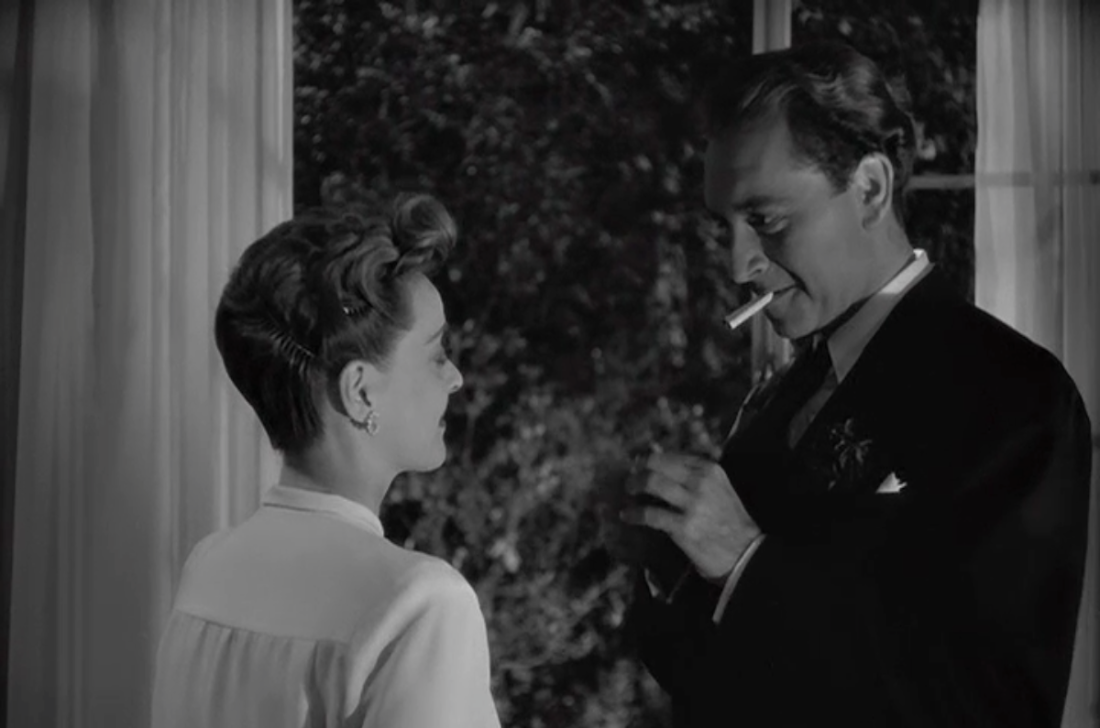
Can you figure out which movie line is paraphrased by today's title? I am pretty sure that I have mentioned this movie, and the particular scene before, perhaps in one of the previous incarnations of this blog.  "Now, Voyager" is one of those classic old time black and white movies starring Bette Davis, Paul Henreid and Claude Rains in which the heroine is a woman traumatized by her possessive mother, seeks therapeutic help (this at a time when such help was viewed as suspicious and proof of a weak mind), changes from an ugly duckling into a swan, and then falls in love with an unhappily married man who has a daughter whose equally unhappy childhood rivaled her own. At the end of the movie, they do the honorable thing, toward his wife, toward each other, and toward the child they both love. As they gaze sacrificially into each other's eyes, Henreid seals the deal. He says, "Shall we just have a cigarette on it?" He places two between his lips, lights each and gives Bette one.


Watch it on You Tube. It's powerful. Well, maybe it's only powerful to a generation of Baby Boomers and before. But I can tell you, the idea of that scene, or any version of it, with the romantic leads and two joints, well, I just have to be the proverbial fuddy duddy. No way under the moon or stars!

What got me started with this today? Well, I was in the Farmer's Market in Los Angeles, walking  back to my car when I got the strongest whiff of someone or someones smoking marijuana, and I thought that if Proposition 64 passes, as I think it might, in California, which would legalize "recreational" use of marijuana--giving lip service to all the protections for children vis a vis advertisement and availability--I could be subjected to the noxious smell wherever I go. We will have exchanged what I have been told for year upon year is a filthy, unhealthy habit (and that's fine, I am not a smoker, though with all the second hand smoke I inhaled as a child from every relative who DID smoke, I should already be dead) for an even more unhealthy and filthier habit, one that warps the brain and leads to other drug use.

Marijuana has always smelled to me, and to others who object to it as much, like the noxious spray of the skunk. It actually makes me feel sick if in too much concentration, as in some concerts where my generation remember the good old days when they didn't trust anyone over 30. Now that they are more like 70, I wonder if the old axiom raises any ontological problems for them? But I digress.

We are telling our soldiers that they can't smoke cigars, an idiocy if ever I heard one. But we are going to open the floodgates to weed?

Now personally, I don't care if you smoke marijuana, or drink, or smoke cigarettes.  What I do care about is summed up in words spoken by Burl Ives as "Big Daddy" to Elizabeth Taylor and Paul Newman in "Cat On a Hot Tin Roof", "Didn't you notice a powerful odor of mendacity in this room?"

"Mendacity" folks, is lying. If you are going to insist that children and adults be forbidden (you say they are not forbidden, but in truth, there is all sort of restraint and societal disapproval heaped upon smoking) then what of marijuana? You cannot in all seriousness want to make marijuana the cigarette of the future? Oh, you can? Talk about the powerful odor of mendacity! And an odor that is far more objectionable than that of any cigarette. What of my rights not to have that stink and second hand high thrust upon me?

Well, there is nothing I can do. I live in California and the folk here are itching for legal toke parties.
I can't get the image out of my mind of Bette and Paul sealing the romantic deal with joints,  It is very disturbing. But I really don't want to hear about how bad cigarettes are and how they should be limited. Oh, and, we are doomed.


Saturday, September 24, 2016

"Miss You Desperately"

"Miss You Desperately" was how Noreen often closed her letters and e-mails. I'd say "to me" but I suspect that whoever she wrote to, someone a long way off, geographically, got the same closing. Still, it always seemed so personal to me. Made me feel significant. She was the only person I have ever known to use such a phrase--whether she made it up or adopted it I don't know--and I loved it.

I think about Noreen often. She became a friend when she was engaged to, and then married Gary, with whom I had not only attended college, but shared that bonding experience of our then student run radio station, WFUV, Fordham University, New York.

One of the parties I used to have in my father's Bronx apartment before I left home for Califoria

They married in the late 1970s, and my life's journey took me to California only a few years later, so over the years I saw far too little of her, something I still regret. Yet though rare, and too brief, my encounters with her were always a joy. Our conversations--I particularly remember one when she and Gary came to California and we were on the boat to Catalina--were deep, and satisfying. She had encountered breast cancer personally. I had encountered it in the loss of someone, my mother, to its virulence. So maybe that was part of the bond. There was, also, her particular thoughtfulness, different in kind, from the ordinary. She just was one of those special people you are privileged to meet. I was privileged to meet.

I said I think of Noreen often. Every day, explicitly, or implicitly, as I pass this framed item in my living room.


In 2002, when I made one of my trips to New York, I stayed at the Algonquin Hotel in Mid-town. Back in the 30s, the hotel had been the haunt of various literary figures, Dorothy Parker and Robert Benchly among them, the glitterati literati of the age, known as the Algonquin Round Table. So many quips from the members of that group wended their way into our social consciousness. I was enamored of the place and I so enjoyed my stay there, sipping apple martinis in the lounge, as Mathilda, the house cat sniffed luggage and flicked her tail on the concierge desk, as I ate heartily in the dining room as it appears above, capped with dinners nearby at Sardi's before a Broadway show. I shared my joy with everyone. But it was Noreen who so clearly absorbed my joy, for one day, for a birthday or holiday, I no longer remember which, I received the item above in my mail. She had taken a postcard of the dining room of the Algonquin, provided it an expensive frame and a brass like label to enhance the image. It's not the only thing in this room worth more than money to me, but it is one of the most treasured. The emotional and personal effort in so small an item with such importance to me has always impressed me in a place only a very few have reached.

I think as I write, of an evening, perhaps it was that same year 2002, I can't place it for sure, when Noreen, and Gary, and Len and I sat on their amazing terrace of their home in Westchester, New York facing a lush backyard, and just talked and laughed--their dog was barking furiously at some bug on the floor, and their son, Casey, was practicing his pitching moves silently while we watched--and it was just, well, nice. Surely there would be more of these moments.

Do you know, no I don't think I have told many people this, that Noreen used to call my father and check in on him in conversations he thoroughly enjoyed after I moved to California? She wasn't the only one kind to dad after I left--Len and Andrew were his companions on the stormy night as he waited for his delayed plane to leave for California, when eight months after I moved, so did he. But it was the unique nature of her kindnesses that impressed me, warmed me.

Both Dad and I have stars named after us somewhere in the carpeted skies, courtesy of Noreen. I just love that.

Everything she did, even if it was a small card, seemed personally made, and well considered for the recipient.


In the summer of 2010, I was on one of my visits to New York. It is always hard because the stays are short, and the number of people I hope to see, and not insult by a failure to connect, is disproportionate to the time available. But I had called Noreen to suggest lunch or dinner. She initially declined, and I remember being confused by what sounded like a disinclination to see me rather than a schedule conflict. Something seemed off. And then she called me again and said that she and Gary would be in Manhattan for a play, and while it would be very short, could I meet them at the Hard Rock Cafe in Times Square?  I was delighted.

And so we met, and I think I picked up the small check because I was so happy to see them, amid the crush and voices of tourists. She sent me a lovely thank you note I can't now locate, but am sure I have saved, somewhere. You would have thought I had given her dinner at the Ritz from the generosity of her words. Still, I had felt something was wrong when we met. And I hoped what I thought it might be was not the case.

I was down in Long Beach near the Queen Mary sometime later, the fall, 2010. She had visited Long Beach with me, and Gary and Len, and we had gone to a favorite restaurant of mine in the Long Beach Museum of Art. I wanted to remind her of that wonderful day, and so sent her a phone photo as I had lunch alone down there one day after a hair appointment. I think I was wishing she were there and we were having one of those too rare deep conversations.

Noreen died of the returning relentless cancer soon after.  I look at her still standing Facebook page from time to time. I am glad it is still there. I hope it will always be there in some form after all of us are gone. I regret that I don't stay in touch with Gary and hope that I, that we, will reconnect soon. I keep tabs on Casey, their son, through that same Facebook, who seems to be thriving. I imagine Noreen's delight.

I was going to write, "Noreen, I miss you desperately" but then I realized I feel her around me. And then I look at my beautifully framed postcard, and I am sure she is.


Monday, September 19, 2016

The Way It Was


This next of Dad's writings is especially short, though the entry will not be!

The event which triggered his reverie was my fiftieth birthday, now well over a decade ago. I had decided I wanted to orchestrate a party, at the beach, with people from various parts of my life, then largely the State Bar of California, where I was then working, my college days, and my younger days. I selected a restaurant right by the water, Moonshadows, and booked about five rooms, for myself and those friends who would come into town from the East and from San Francisco, literally right on the beach at the Malibu Beach Inn. 


Among the people I invited, but one who could not attend, was the first woman my father seriously dated, nearly five years after my mother's death in the late 1970s. At the time he was just 60 years old and she was (I guessed, for she has never told me her actual age) about 16 years younger, in her early forties. She was beautiful, a full blooded Greek woman who had managed both career and family, but was then separated from her husband. (She remained separated always, for divorce was not a serious option for her Greek Orthodoxy; she would end up being her "technically" still husband's caregiver at the end of his life for among her qualities was, and is, compassion). She had even attended the same Greek school as had my father, though many years later. She was openly affectionate, and had a boisterous laugh that belied her otherwise quiet charm. And, as my father loved, she was a great dancer. They tore up dance floors in New York, places like the once well established Roseland. If it had been up to me, they would have remained a couple. But it wasn't to be He told he broke up with her because he felt it unfair for someone so young to be placed in danger of having to care for an old man, with a heart condition--dad had his first heart attack at 51, and another, a year or so after they went their separate ways. She would tell me many years later, for I felt a strong need to stay in touch with her, that it had been a mutual decision--the time hadn't been right. I suspect it was also because of her religiously inspired faithfulness even to a separated husband. 

Over the years, any reference Dad made to her was always with fondness, more than fondness. I had invited her, when he turned 80, to come to California and share that milestone with us. She had not been able to come. And again, when I was 50 and Dad was 86, I had invited her but she could not come. Dad pretended that this was as it should be, and that it did not affect him. But of course, it did.


Dad enjoying my party with some of my friends
It just happened that one of my long time friends is also full blooded Greek American and while she did not look exactly like my Dad's former inamorata, I recognized that there was something that was similar about their facial structure. My friend Carol, then approximately the same age as Dad's once love had been some twenty five years before must have looked as Dad remembered her. 

And out of that context, as I now reconstruct it, Dad wrote the following:

What does one do at a party for sixty-three?  Mingle. I mingled. I am well known to most of the invitees.  I enjoyed the hubbub, the handshakes, the hugs--some ceremonial; others more affectionate--the kisses on the cheek.  The clink of glasses and the laughter of my daughter could be heard above the unintelligible hum of many voices speaking at once. It was gay and festive.

A woman came toward me he hands extended and taking mine.  She said her name, but I did not hear it. I was stunned.  She had come after all,I thought. I was silent and unresponsive.  She was still beautiful and surprisingly affectionate considering I had broken off our relationship some twenty-three years ago.  There had been little change after all this time, though I thought she might be a little heavier than I recalled.  She noted my consternation and laughed.

"I'm Carol," she repeated.  She seemed amused. The name penetrated my consciousness and finally, I recovered.  It was not her name, the her of my memory.

Perhaps it was an illusion, but the resemblance was remarkable.

I felt relief, but also regret. It might have been pleasant had she really come, though I probably would have been as awkward as I appeared to Carol.  I realized I would not have been able to maintain the slightest appearance of urbanity.  I needed to explain to Carol. I realized, suddenly, that I was still holding the hands she had extended when we first greeted.  I remembered that she too had been a touching person.

Later, as I mingled once again, I encountered my peripatetic daughter.

"Dad," she asked, "are you ok?"

"Why do you ask?" I responded innocently.

"Well, Carol told me you paled suddenly when you met her.  Are you sure you're ok?"

While Sophia, the object of Dad's wishful mistake, did not come to this party, she did come for a quiet celebration of his 90th birthday, some four years later. By then Dad was ill, and I knew (despite his protestations) that there would be no more chances for a reunion. There was dinner at Madeo, and brunch at the now defunct Mirabelle. It warmed my heart to see Sophia holding Dad's hand as they together walked up the stairs to my church for Mass. He mustered his old charm and as best he could, speaking Italian to the owner of one restaurant, critiquing, sub rosa, the serving of a Bloody Mary in the wrong kind of glass at another. He died three weeks later.

I conclude this entry with a number of photographs from that party which Dad shared with me--he never gave up on trying to get me to tell him how much it all cost; he couldn't fathom I would have a birthday gathering and pay for it.  I realize, and it makes me a little sad, that I have seen very little of many of those who attended over the last years, all people I still have great affection for.  Maybe the time will come for a little reunion. That would be nice. And those I do see regularly, for that I am very grateful. Life is short. It is hard to believe that Dad has been gone over eight years.


Bob P. and Len K.


Diane, Peter, Dane, Adriana and Yvonne

Two Carols, the second is my cousin


Nancy and Maridee


SOME CARDS AND GIFTS, DONATIONS!

Noreen had a star named after me.

Karen, Cyd, Geri Janet and me

Joey, Jim, Mike and Jessie

Mike

Carol, Mike and Me

Ellen, Bob and Len

Geri and Kathy

 Big Donation!

Marc

Another Geri, from Australia and Chris

Me and my pix

Carol, Mike and Me

Bob and Len

Me and Cyd

Cyd and David

Veronica
Jeff and me

Luis and Murray

Dede, Margaret, Jim and Joey


I am a very fortunate person to have or to have had so many wonderful people in my life! Some are gone, and I miss them, but that only makes their importance soar!


Wednesday, September 14, 2016

Reflections upon Seeing a Child at The Library

Observation, and Remembrance, written by Dad, February 26, 1996


The child was very young, perhaps four or five years old.  He clung to her right hand as if there was no thought of his ever letting go.  She seemed to minister to his need, and, as a consequence, she had great difficulty maneuvering three books to the counter with her left hand. She presented her library card. 

I heard her say to the child, "You know, you have to return these books after you have finished with them."

"Why?" the boy asked.

"Because they belong to the library," she said, "and then you can borrow some more."

Clearly this was his first introduction to books.

The woman was austere. She wore no make-up.  She was tall and thin, and I marveled she could reach so far down to allow the boy the security of her hand, which he still clutched.  He was small. From his garb I guessed he had already been introduced to the world of objective truth--perhaps an introductory taste of self-abnegation. He wore a Yarmulka and the fringes ordained by Torah, hung loosely below his leather jacket.  There was more than security in that gentle hand that he grasped. There was a bond between them, and the promise she would still be there for him when he felt he could release her from that grasp. Three books to start him on his journey of learning and discipline, a quest that began when the world was young.

I felt a twinge of jealousy.  In my childhood, books were not a primary consideration. There was school; but that was a requirement of the laws of this new country to which my father had emigrated. Beyond this requirement, books were a frivolity. There was my father's store. It was summer and vacation time from school. One was never too young to learn about work.

The years fall away.  I am perhaps a year or so older than the boy in the library.  I am on my way to work. It is my first trip alone from the Bronx to Manhattan. I remember. I can hear the rumbling of the massive Third Avenue elevated train that snaked its way, high upon massive pillars of steel, towards the 149th Street Station, where one debarked for the IRT, that thunderous subterranean Seventh Avenue express that would take me to my destination.

So it was, on that day, I descended to the underground station in time for the arrival of the train which was screeching to its customary halt.  I was confident and proud that I would accomplish this trip alone and unaided.  I had come this way several times before, but not by myself. But the sounds were familiar so I mounted the train, savoring the praise that would surely come from my father and the other admiring adults at the store.

When the train made a turn I did not recognize, terror set in.  When it made its first stop, my terror increased. "Mott Street" said the signs on the massive terra cotta walls. When the few passengers who had entered the train with me were gone, I was alone in a silent, high-domed vastness. Distant footsteps echoed menacingly.

Passengers for the next train began to arrive. The enormity of my peril, not another nickel for fare, even if I knew how to get back. I began to cry. A crowed gathered about me. My tearful incoherence made no sense to anyone. Many of the put nickels an dimes into my hands "You took the wrong train," was repeated over and over again  Everyone had advice which I did not understand.  Finally, a woman took me by the hand and led me to an overpass that traversed the tracks.  We rode back, together, her hand still holding mine.  We recrossed the tracks as a train was arriving.  I started forward. She restrained me.  "It's the wrong one," she said.  "There are two Seventh Avenue Expresses at this station.

She was still holding my hand as she placed me on the correct car  She bent down, gave me a kiss on the cheek, and a quarter.

I was one dollar and forty cents richer--an enormous sum  I have no recollection on how I spent this fortune, but I still remember the kiss and the comforting warmth of her hand.

Tuesday, September 13, 2016

Caprice

My father in 1989
I haven't been incorporating Dad's writing of late. There are just so many pieces that it is, frankly, overwhelming to be retyping them (scanning wouldn't be clear enough for ease of reading) and, I think, it is impersonal to do it that way. And, for some reason, I have been feeling inertia.  I have not been tackling many of the things on my long term "to do" list.  Then a sudden spark of realization of the transience of life in general, and mine, in particular, reminds me--at this stage of life I cannot assume the long term. And whatever I am going to leave behind for a memory of my immediate family, as I am its terminus, is only going to be in the computer ether. This generates urgency.

Let's see how long the current resolve lasts. Probably not long. But at least now, this moment, another of Dad's stories, this one about his response to a political call for a local candidate back in the 1990s. 

The voice had a child-like quality.  I could not immediately place her age. 
"Is this the Gochis residence?"

High school or early college--a newly installed telemarketer, I thought. But I wasn't sure. I decided to use my least offensive method for cutting unwanted calls short.

"Mr. Gochis is on a tour of the Cayman Islands," I answered.  "I'm the butler."  I find this method useful in discouraging the telemarketers.

She laughed. She was not put off by the tactic and the tinkling sound in her voice tempered my impatience.  I decided, instead, to listen to the sales pitch.

"What's your name?" she countered.  There was generous good humor in her tone.

"My name is Constantine." I replied, fully expecting the usual incomprehension, the hesitant garbling response to the name.

"Contantine!" she exclaimed. "That's a nice name."

I was pleased. I continued with an expanded comment. "Yes, the thirtieth in line from the one who had his head stuck on a pole for talking to the wrong people.  He had unfriendly conversation with Mohammed II when the Ottoman Turk took Constantinople in 1453."

She laughed again.  It had a genuinely pleasant sound.

"I'm not selling, I am offering hope, hope for the children of our schools."

The "children" I thought.  Another chant from the Dome in Washington.  My enthusiasm was slightly dampened.

"Are you running for something?"

"No," she demurred, "just helping the fight."

"Are you in college or an aspiring political who has been promised a fat I.O.U.?"

"I'm a sophomore." 

"What's in this thing for you--a job, a novitiate aspiring to more ambitious internship--pardon the expression."  I felt a little guilt at the question.

"No," she said, without indication of offense taken, "all I want to do is to help Caprice in her work."

"Who is Caprice?" I asked.

"Caprice is our hope for better schools, for the children. She is running for leadership in the coming School Board primary on April 13."

"Rather an unfortunate name for a politician," I suggested.  "Haven't we seen enough capriciousness in politics in the last several years?"

She had no response.  She seemed rather to be reading now.

"Caprice Young is endorsed by the Los Angeles Times. . ."  Mentally, I made this one count against her.

". . . and Mayor Riordan. . ." her voice continued. Again not a recommendation in my book.

". . .she will provide the kind of thoughtful common sense and leadership, and accountability, that our system desperately needs. . ."  I had had enough of the lyrics and so interposed, "Do you believe all of this?"

"Yes, I do," she said with that enthusiasm only possible in the very young and as yet unspoiled.  "Will you come out for her on the 13th?"

I thought it would be sinful to deny her a small victory  Such innocence deserved at least tolerance.  "Yes, I will," I encouraged.  It would be capricious of me not to"

She laughed a third time.

Last night I channel-surfed the news for the election results. If there was any, I missed it.  I learned however that some unfriendly bees were swarming in the vicinity.  On a happy note, the last of a trio of criminal beavers was capture.  California trees are now safe from these marauding dam builders.  Last but not least Arkansas judge Susan Webber Wright discovered that President Clinton lied.  Now that's news.